
Ashtanga
Ashtanga Yoga is more than a series of postures — it is both a method of practice and a philosophy of life, rooted in ancient India. It is a tool for self-transformation, helping practitioners cultivate optimal health, inner peace, and well-being.
Whether you are new to yoga or deepening your practice, Ashtanga offers a path to personal growth and mindfulness, connecting body, breath, and mind.
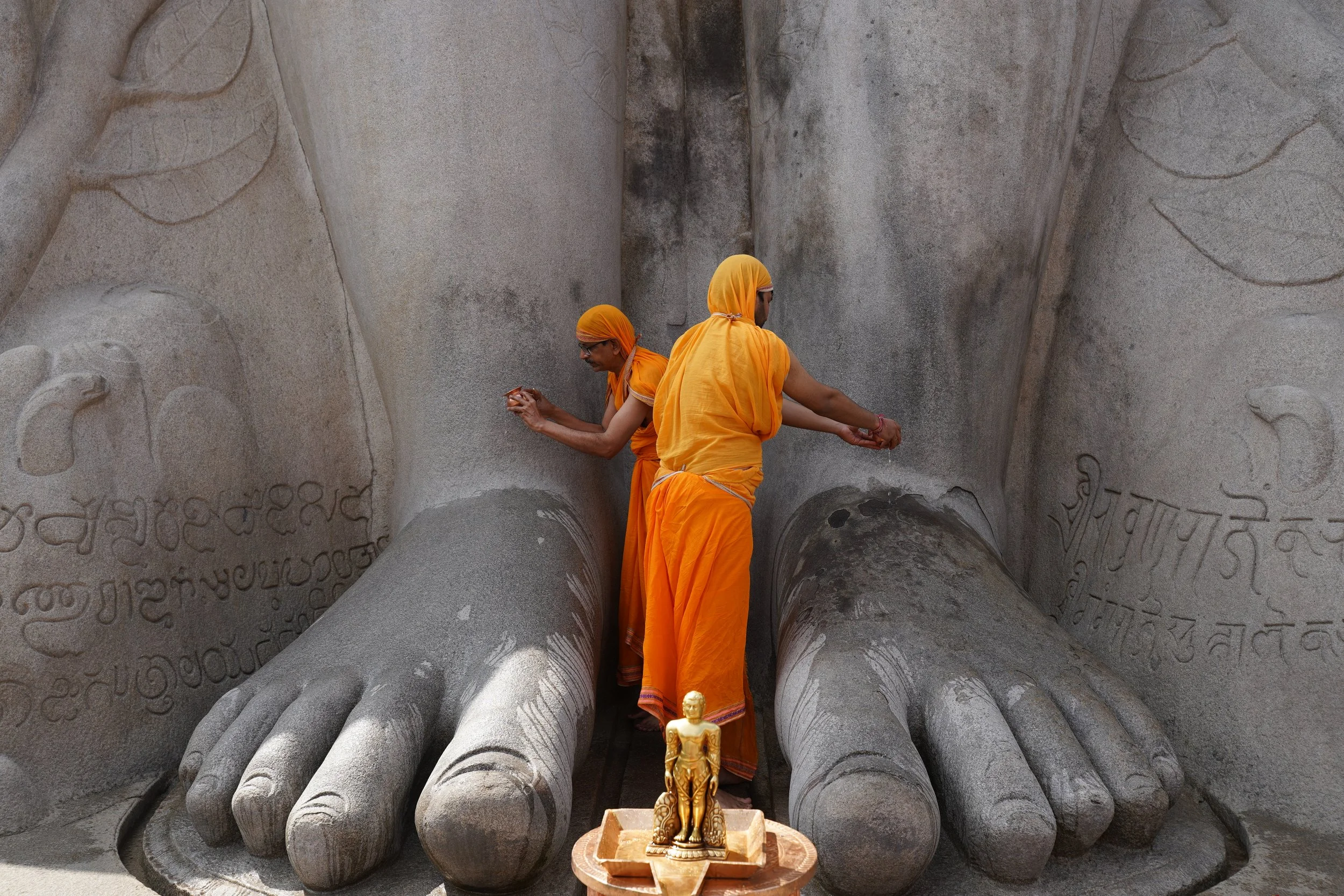
“Yoga is the journey of the Self, through the Self, to the Self”
Lineage
In India, yoga and many spiritual disciplines are traditionally passed from teacher to student through paramparā — a direct and continuous lineage of learning.
Within the Ashtanga Yoga tradition, the teachings flowed from Ramamohan Brahmachari to Krishnamacharya, then to Pattabhi Jois and Sharath Jois. Ashtanga Yoga Jersey’s founder, Anna Haines, studied directly with Sharath Jois from 2016 until his untimely passing in 2024.
Having received the practice in this traditional way, Anna is committed to teaching Ashtanga Yoga with the same authenticity, integrity, and respect for the method as it was passed on to her.
What are the eight limbs of yoga?
Yoga is a way of life and a philosophy that can be practised by anyone. The term Ashtanga comes from Sanskrit: ashtau means “eight” and anga means “limb,” referring to the eight-limbed path of yoga. Ashtanga is also called Patanjali Yoga, after the author of the Yoga Sutras, a collection of 196 sutras outlining the theory and practice of yoga.
The eight limbs are:
Yamas – restraints or ethical disciplines
Niyamas – ethical guidelines for personal conduct
Asana – postures
Pranayama – breath control
Pratyahara – withdrawal of the senses
Dharana – concentration or one-pointed attention
Dhyana – meditation
Samadhi – bliss, union, complete absorption, or ‘oneness’
A practitioner should be firmly established in the first four limbs, including asana, before the final four limbs gradually unfold.
Asana practice is guided by the principles of tristana, which consists of:
Breath
Bandhas (energy locks)
Drishti (gaze point)
Applying tristana transforms an asana practice from a purely physical exercise into a meditative experience. Postures should always be practised with ease and stability, achieved when the breath is calm, the bandhas are engaged, and the gaze is turned inward.
Postures
Breath is central to Ashtanga practice and is often one of the first things newcomers notice in the Shala. Breathing through the nose — referred to by Sharath Jois as “free breathing with sound” — should be continuous, slow, and steady throughout the practice.
Movement in Ashtanga always follows the breath. This principle is the essence of vinyasa: linking each inhale and exhale to the correct movement. Practising vinyasa between postures generates internal heat, detoxifies muscles and organs, and offers numerous other benefits.
Breath
Bandha means “to bind” or “to lock.” In Ashtanga, we primarily work with Mula Bandha and Uddiyana Bandha, energy locks that activate and direct the flow of energy in the body.
Bandhas may feel counterintuitive at first, but with regular practice they become an integral part of your asana, supporting both physical alignment and internal focus.
Bandhas
Drishti is the use of a focused gaze to bring concentration into the practice. Each asana has a specific gaze point that encourages awareness of the body, alignment, and breath.
For beginners, maintaining drishti can be challenging — the eyes may wander — but cultivating this focus gradually strengthens concentration and stabilizes the practice, making each posture more grounded and meditative.
No prior knowledge of yoga, postures, or philosophy is needed to begin practising at Ashtanga Yoga Jersey.
Students typically start by attending classes and learning the postures, known in Sanskrit as asanas. A deeper understanding develops over time through daily practice, salf-study and participation in occasional talks or conferences led by the teacher.
Drishti
Why practice Ashtanga?
A regular Ashtanga Yoga practice offers benefits on multiple levels — physical, mental, and energetic. Each series of Ashtanga serves a different purpose:
Primary Series – Yoga Chikitsa: realigns and strengthens the physical body.
Intermediate Series – Nadi Shodhana: purifies the nervous system by opening and clearing energy channels.
It is important to practise the series sequentially, progressing to more advanced asanas only when the previous series is well integrated.
Yoga requires patience, consistent effort, and dedication, but its benefits ripple into all aspects of daily life.
Benefits you may notice through regular practice:
Increased strength, stamina, and flexibility
Stronger core to support good posture and a healthy back
Improved concentration and mental clarity
Greater body awareness and balance
Increased energy levels
Support for a healthy weight and activity level
Reduced stress and anxiety
Minimized symptoms of depression
Lower blood pressure
Improved digestion
Better sleep quality
Yoga practice is often recommended as part of the management of diabetes, respiratory disorders, hypertension, hypotension, and many lifestyle-related conditions. It can also help reduce fatigue, depression, anxiety, and stress, supporting overall mental and physical wellbeing.
What our students say
“High integrity practice and offering, great for beginners and advanced practitioners. A place for all.”
— Naomi West